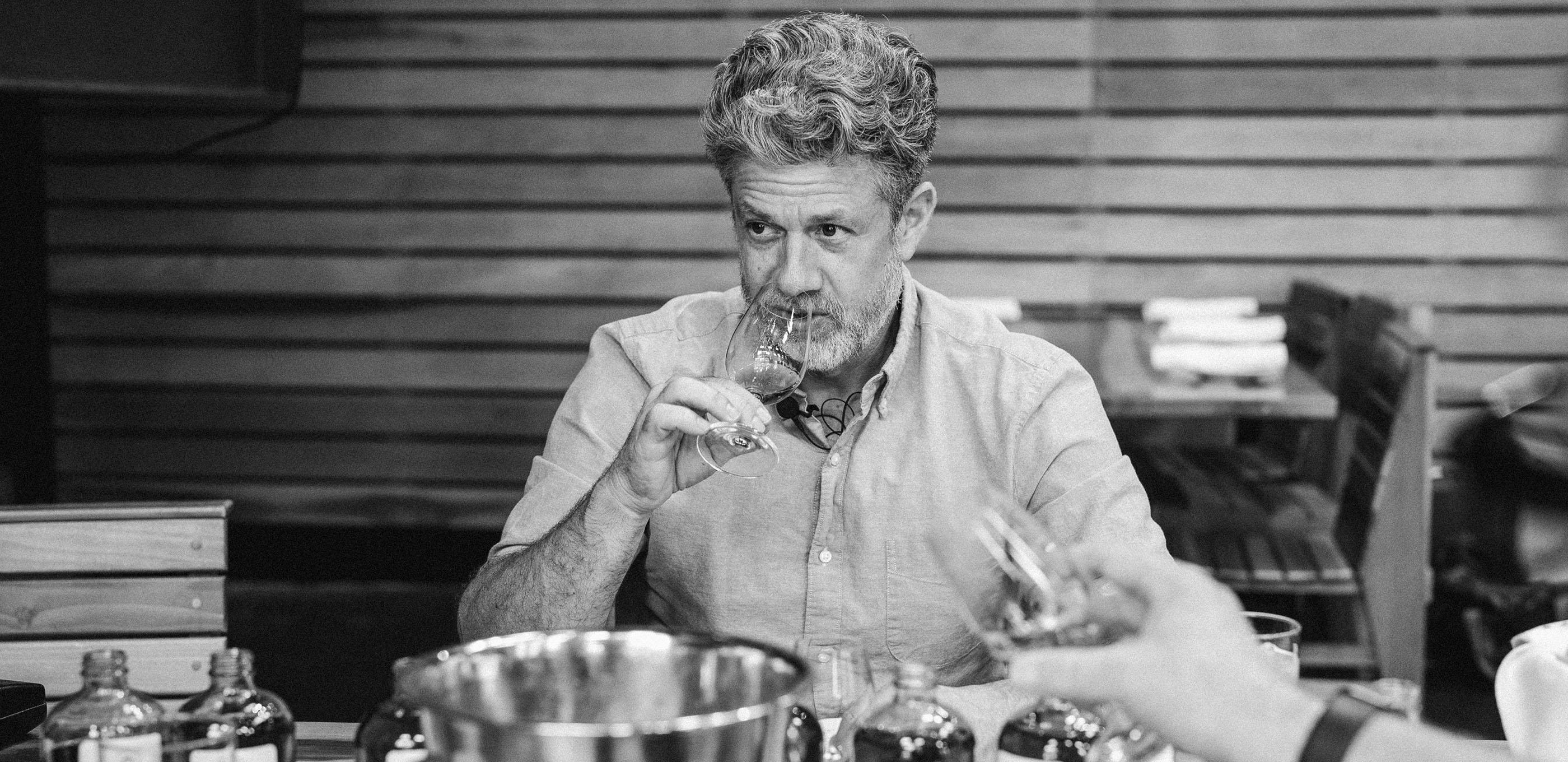
Pinhook was founded by three friends with just twenty barrels. Leveraging the experience and unique skills of each co-founder, the framework for a new approach to whiskey came to be. At the helm, Sean Josephs has used his work in restaurants and with wine to inspire whiskey releases that focus on the distinctive flavors that each barrel gives you in the direction of “vintages”. The result being that every release is unique in its character and by virtue is distinctly collectable. We sat down with Sean to learn more about his early years in restaurants, the inspiration behind building Pinhook and his vision for the future of vintages and blending in whiskey.
How did your passion for and work in food and beverage begin?
I always liked cooking from a young age, but I never connected it all early on. I was in high school and I was following recipes, but I never really connected the dots that this meant I had an interest in food, but I do think that this was maybe my first spark. And then randomly, just because it was one of the jobs available at the time, I worked in a kitchen when I lived in Telluride, Colorado while I was doing the ski bum thing. Some things there were made from scratch, some things came out of bags, but there was definitely something I liked about it – it didn't make me want to become a chef, but I just liked the energy and the environment.
Fast forwarding a number of years, in 2004 my wife opened a Spanish tapas bar in New York called Tía Pol; it's still there 21 years later. I had recently been fired from my job at an advertising agency, and I really didn't enjoy what I was doing, and so I was just trying to figure out what to do with my life and killing time, and I started working as a food runner in her restaurant. It was really then that I was bitten by the bug.
I loved the energy and the camaraderie. I played a lot of sports growing up, and it's kind of the closest thing to that in a way; you really do feel like you're a team. It's also physical; you're moving in a space around each other, around the guests; you're trying to do things like clear plates quietly and pour wine in the right way with the right amount in each glass. There's just a lot to keep you engaged, and I did think about going down the cooking route for a minute. In her restaurant I got an up-close look at how hard and punishing that work was. Now, I’m not afraid of hard things, but I was like, wow, that's really punishing. I've been 100% in the world of food and beverage ever since.
How did that transition into enjoying great flavors in wine, and then in spirits?
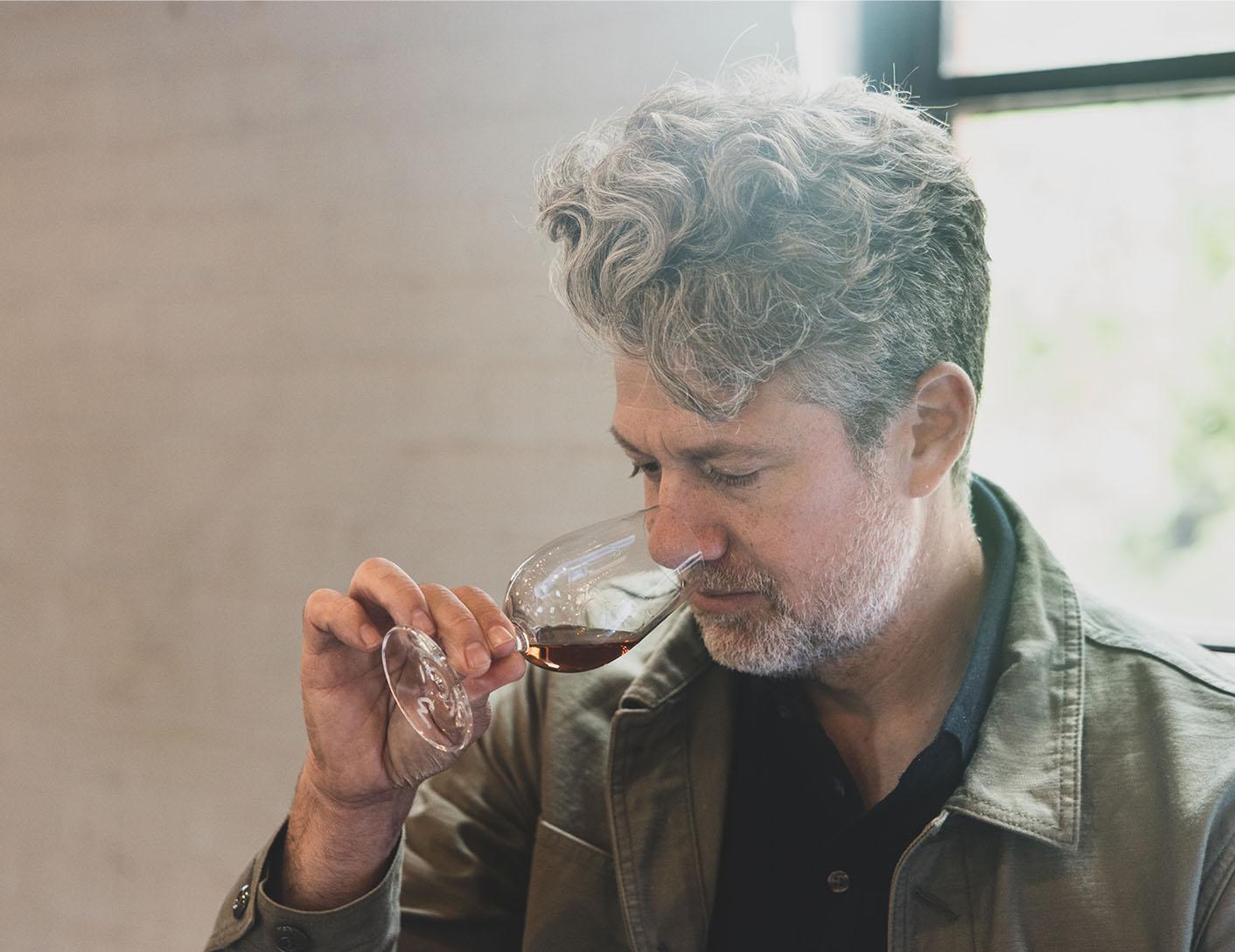
Even though my wife's restaurant was more casual, they took the food very seriously in terms of crafting each dish, the balance of flavors, and then learning about the different regions of Spain that the dishes were coming from. When you really start tasting things critically, I think that is the beginning of a journey. Once I decided that I felt like I was going to have a career in the world of restaurants, that led me to go work at a fine dining restaurant in New York called Chanterelle, which at one point had been a four-star restaurant. The sommelier there, a guy by the name of Roger De Gorin, is a Master Sommelier, and I quickly learned from him that you really need to know about wine to work in this type of environment. Because the guests are going to ask you what wine by the glass to pair with what dish, and I just felt like it was a necessity, and at the time, I really knew zero.
The first thing I did was call the American Sommelier Association, and I studied to get my Sommelier certificate. Then I worked on the first two levels of the Quarter Master Sommeliers, so I got my certified sommelier from the Quarter Master Sommeliers. Then you're in blind tasting groups, because blind tasting is a component of this, and you're just tasting, tasting, and more tasting. I think once you start doing that, then you're always doing it, no matter what, not just in wine. And now that cocktails are more prevalent, sometimes you kind of now have this bifurcation between the sommelier and the bar director, but when I got started, that was not the case. You're the someone in charge of all of it – you're in charge of buying all the spirits, buying the beer, and so forth, so you were meant to be knowledgeable about the full thing. Bourbon became something I intersected with, and as part of my studies, I became enamored with it. As I was developing my palette, I developed a real affinity for bourbon. Also philosophically, it's kind of the opposite, or at least it was, of wine.
Bourbon was something relatively inexpensive, over delivers on quality relative to price, is non-perishable, and doesn't have any snobbery. Especially at the time when I was exploring the space, tasting things critically, like quality, structure, complexity, aroma, flavor, all those types of things, and you are in a world where Van Winkle 13 Year Rye cost $50 and was readily available, and that's your impression of bourbon, compared to some $980 bottle of wine, where you're kind of like it's okay, that’s quite a place to start.
When did you conceive of just diving into the world of bourbon?
The first thing that happened was that I realized I didn't want to be a sommelier. I was a sommelier working in restaurants in New York, but I saw the future of what this path looked like, possibly running a wine program and doing wine pairings, and it just didn't seem like I wanted more. That led me to open an American whiskey bar and restaurant in Brooklyn called Char No. 4 in 2008. I love bourbon, I love food, I love restaurants, and I love hospitality. Let me put all those things together in a way that's super unique.
At the time, no one was really doing bourbon bars because they weren't really a thing yet. I'd always had this passion and interest in food that I'd been cultivating through restaurants. I had developed this kind of new passion for bourbon. I also felt like there were enough wine bars. I wanted to do something entrepreneurial, and so what I imagined was a bourbon bar like a wine bar, where you have lots of different stuff you can try, and not so much like pairing, but the menu is the smoked, grilled, and charred flavors that have an affinity for bourbon. And so the one thing that I did that I have to at least give myself credit for, was that I conceived of that idea for what if we had a one ounce taste and a two ounce pour for whiskey, so that way if you could try lots of different things. I know that sounds very basic now, but back then, I had never seen that before. Sure, the concept wasn’t new to wine, but I thought wouldn't that be cool with bourbon?
We had a chef from Austin who worked for Daniel Boulud for 10 years, who knew how to make four-star food. So what if you take all that great technique and you make things that are really delicious but also approachable? So, now you're having elevated food, and exceptional whiskey in a beautiful setting. I'd never seen that before, and so that was really the vision – give you an opportunity to see bourbon differently if you put it in this different context and try all these different things in one place. I've heard people say many times, Char No. 4 was a real seminal restaurant because it was kind of the first place where there was this massive focus on American whiskey, and people could taste all these different things and be educated.
How did being a restaurateur lead to Pinhook?
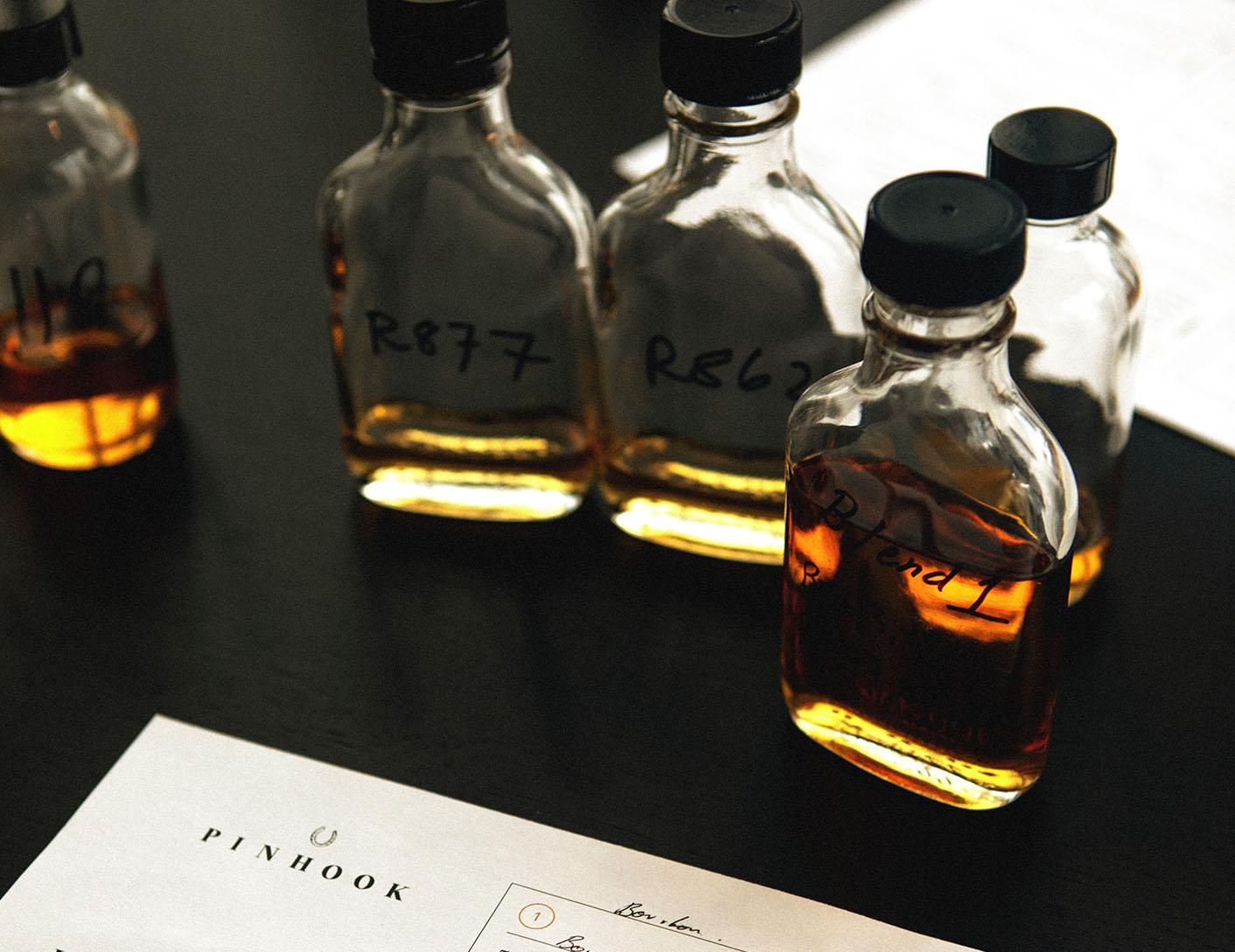
With the restaurant, now I'm around bourbon every day, and I really want to understand more, and put my hands on something. That was one part, and then the other part was that all the big guys already do everything so well, what can we do that would be different? I think it's like anything, like with restaurants, you're kind of looking at the landscape, and it's a stretch to say it's like art, but you have a perspective on what a great dining experience is, and you want to be part of that conversation. So then I was like, “How crazy would it be if we could make our own bourbon?” and then be part of that conversation. Could we do something really cool the same way that we admire certain bourbons? I wondered if we could make something that people would become excited about. That was how Pinhook was born.
The main concept that I had, because of my wine background, was to think about bourbon releases like vintages, where your mature barrels are your harvest, and each time you make the most delicious thing that you can, as opposed to being like stuck in a set flavor profile, just recreating it from batch to batch. I love that idea, philosophically, of vintages, because I think with wine, that's part of the fun of it; maybe there are better vintages, more challenging vintages, or maybe just to your own palette, you prefer one vintage to another. The vintage becomes personal to you, because maybe it's the one you drank on your honeymoon or maybe it's because it's the gift that someone gave you when your first child was born – it anchors something in time, and it creates an emotional connection.
From a production standpoint, I was interested in this idea of making an expression of uniqueness, and then from a sort of philosophical and emotional standpoint, I was thinking well, wouldn't it be cool if you related to the bottle differently because it was time-stamped. And I think even now, because we have vintage dates, people could look at one of our bottles and be like, oh, this is 2017 and then you think about where you were in 2017 – that's the power of vintage; it’s a time and a memory.
What whiskey began the Pinhook journey?
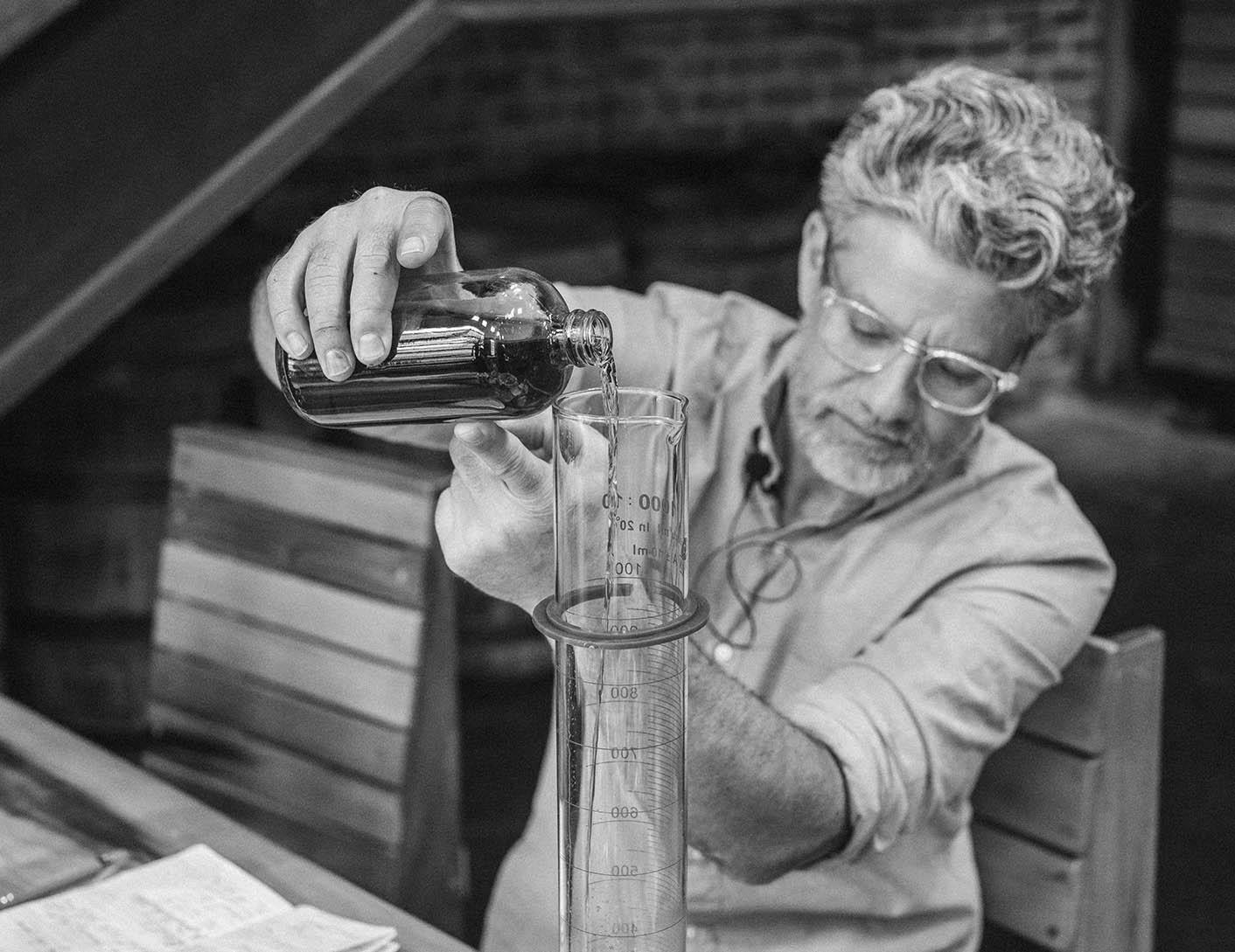
We had this broad idea of vintages, and we had bought 20 barrels from MGP at the time; it was $465 a barrel to buy three year old bourbon. So we started Pinhook for $9,000 plus $248 a year in storage; storage was $1 per barrel per month, and we’re like, “Hey, we've got a bourbon company.” The other piece that was really important to me was transparency. I had a really different perspective on it, because what was happening as I was working at my restaurant, and learning about how little transparency there was.
What's wrong with saying you got your whiskey from Indiana? That sounds kind of simple now, but that was kind of a novel idea when we were starting. High West was a bit in that realm as well as being pretty transparent about sourcing, but there was mostly a lack of transparency in the industry. So that was something that was really important to us. Maybe people aren't tired of this conversation, because it keeps going on, this idea that if you don't make it, is it real? In wine, being what's called a negociant, which is sourcing wine that's not finished, is typical. From there, all of your decisions with the product from aging, type of barrel, blending, finishing and so forth are all massively impactful to the end result – these decisions are just as important as who made the wine, and bourbon is very much the same way. To be transparent and proud about the production and the process is what we do.
I typically hear people in the industry say that 70% of the flavor is the wood, so as long as the distillate is sound, then it’s really what we do with that liquid that will define the result, down to deciding which barrels to blend together, in what combination, at what different ages, and at what proof – all of those things are way more impactful than just the raw material that comes off the still, so we really just wanted to lean into it.
Where did the name “Pinhook” come from?
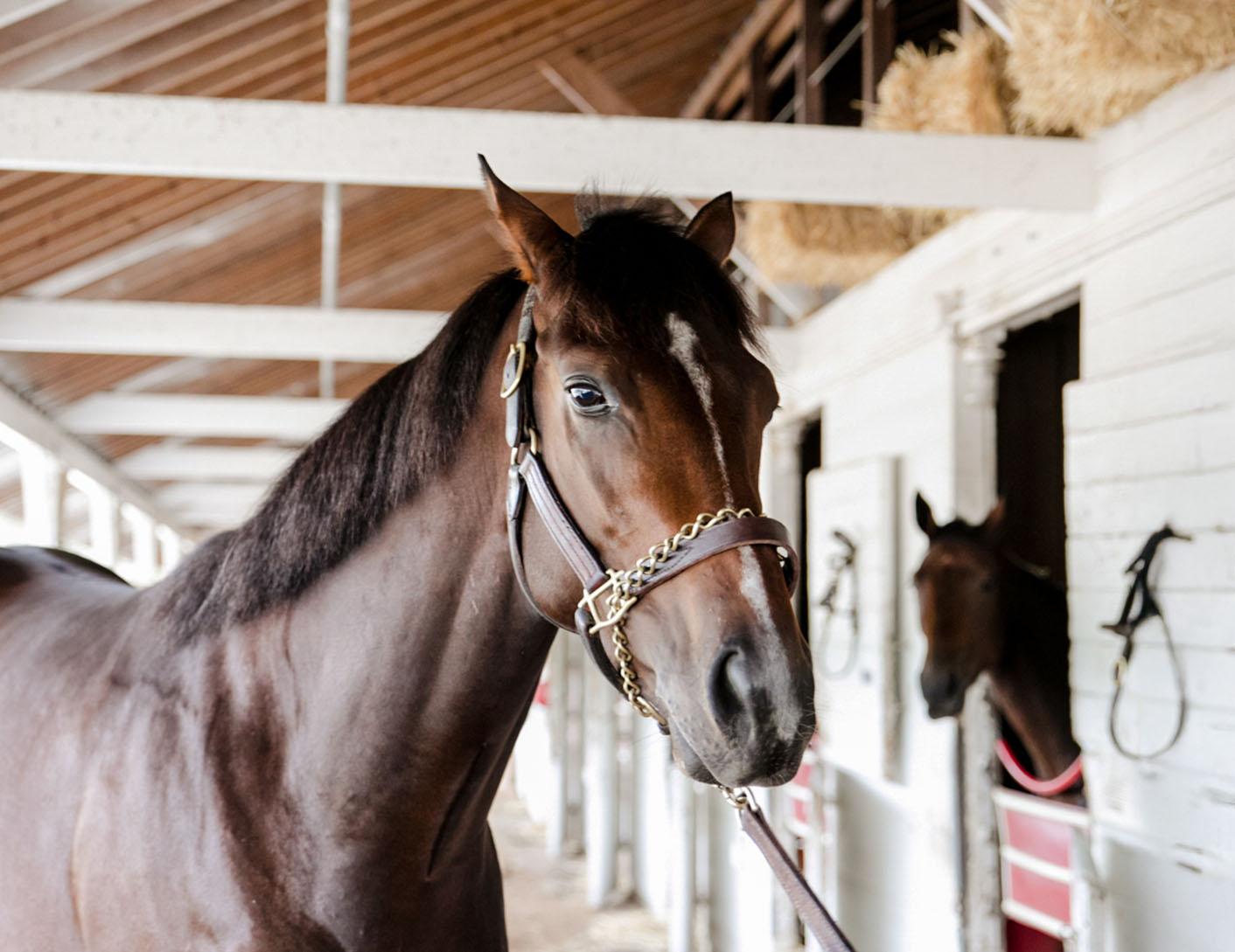
Coincidentally, a friend of ours, Jamie Hill, who grew up in thoroughbred horse racing, was close friends with one of my two co-founders, and we would always stay at Jamie's house in Lexington. Well, Jamie actually “pinhooks” for a living, which in thoroughbred horse racing is when you buy a baby thoroughbred based on its lineage with this explicit intent of selling it for a profit when it's mature, so that connected the dots for us even further; we thought it was a great name to help explain to people the connection that really we're “pinhooking” bourbon – we're buying young barrels based on their lineage, building that intentional focus on transparency into our name. Because when you explain what pinhooking is, you're explaining to people that you don't have a distillery, and you're buying the best young barrels you can, and you're responsible for maturing them to curate the best result.
Jamie also has a racing stable called the Bourbon Lane Stable, and he names nearly every horse in the stable with bourbon or rye, and so we then connected that it would be really cool to use a new horse for each vintage, an active racing thoroughbred from his stable to help reinforce the idea of uniqueness. With every release, we not only change the new vintage date, we also change our label every year with a new geometric pattern inspired by jockey silks, featuring a new thoroughbred with specific wax colors to signify the release type. Every year Jamie picks a two-year-old horse that he thinks has the best chance of running in the derby, and that's the horse for the vintage.
What are you trying to put into the Vertical Series vintage approach?
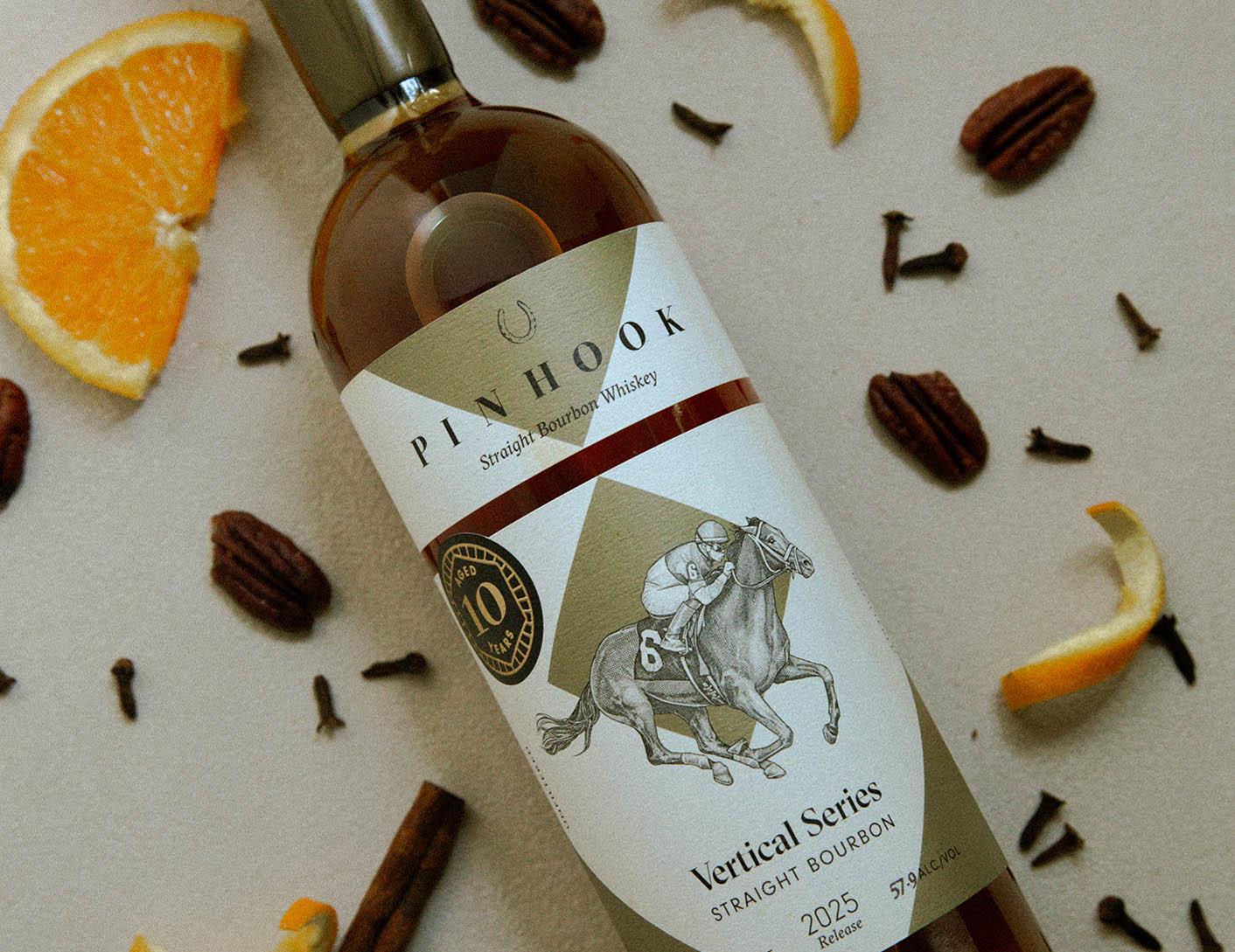
A vertical is one of the most fun things in tasting, because there's no rule on how many vintages it has to be. A vertical might be found when you're looking at a wine list and there are the same wine from consecutive vintages. So, maybe you order the 1990 and the 1995 to taste, so then you're experiencing two different years in terms of the harvest, but then you're also tasting the difference in the bottle age between one and the other, so it's just really for people who love wine, it's one of the coolest ways to explore how wine changes in the bottle. Because bourbon doesn't, for all practical purposes, change in the bottle, I was interested in this idea of how to get to a vertical of bourbon.
Age typically is the thing that people gravitate to the most in whiskey, like older is better, but is that necessarily the case? And so the idea of the Vertical Series started when we had bought a large number of MGP bourbon and rye barrels when they were one year old. While they don't all have the same fill date, they were filled within four weeks of each other, so for all practical purposes, they have the same birthday. Then we waited until all of the barrels were four, when I took a small portion of the barrels and created a blend. The remaining barrels stayed behind to age for another year, and now your entire inventory is one year older. We take a chunk of those barrels, create a blend, and leave the rest behind.
Originally we were going to do that for up to 12 years, but we made the decision that because things are aging really nicely and slowly at Castle and Key, we will be able to extend this program to up to 16 years. No one's ever done anything like it in Bourbon before, and if you have the complete set when the final 16 year bourbon comes out in 2031 you'd have a 13 bottle vertical, ranging from aged four through sixteen. Can you imagine what it will be like to try five versus ten, seven versus twelve, or even four versus sixteen? For the 11 year old, I'll be blending this July, and then after that we've still got all those years to go. We're doing the exact same thing with rye as well, and it's not too late for people to get into it, because now it’s just like one big Easter egg hunt.
What's your approach to picking those single barrels?
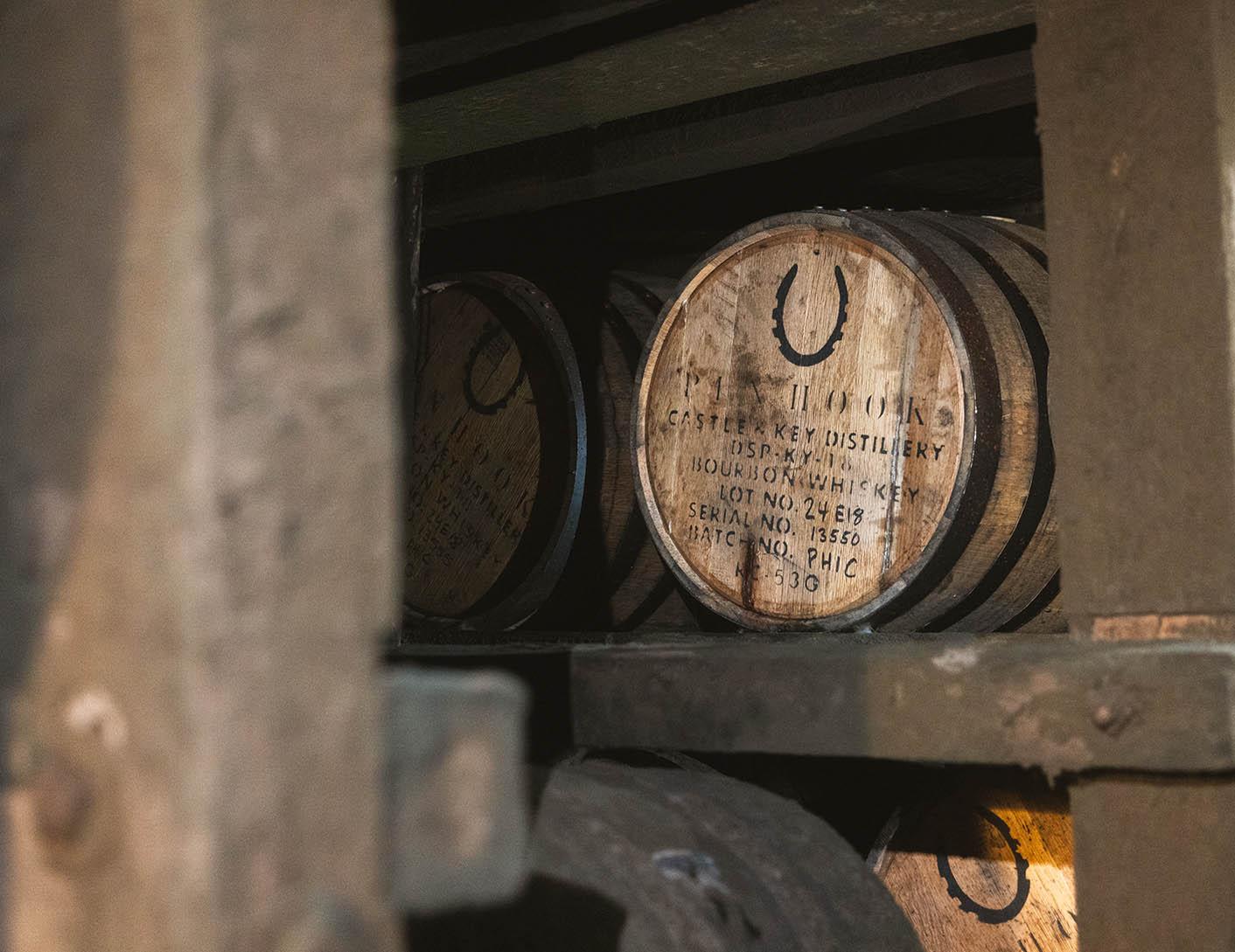
It's really random, because we have all these barrels and they're all the same age. So when the barrels that are pulled for the blend, they are pulled at random and the barrels that are pulled for single barrels are pulled with that random set of barrels. The one thing we do that's really where the work happens is in tasting all the single barrels, so we can break them up into sets that have a variety of levels or types.
This is a bit oversimplified, but when someone is selecting a single barrel, they are getting an option from group A, B, and C, each representing a specific grouping or type we have assigned to those barrels. While they may range in quality or profile, this will give the buyer the opportunity to experience the range of barrels that are represented in our final blend, and select the one that is what they liked, and then it's their job to convince their clientele that they picked a great barrel. It's a lot of samples to get through.
What has it looked like to get creative around blending, in your core releases and limited editions?
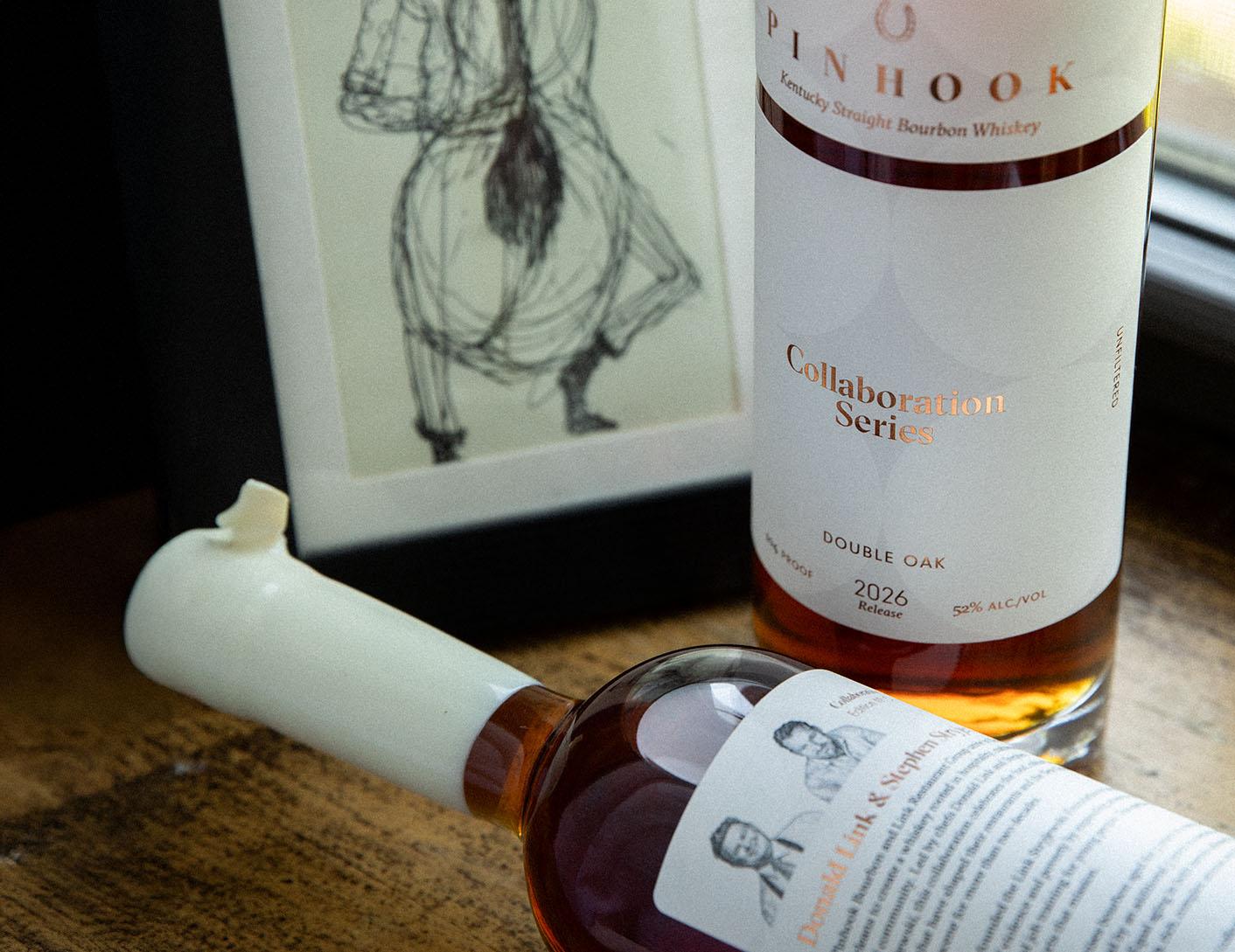
When you're anchored in something, you have some sort of framework or flavor profile that already defines what the whiskey is supposed to be. In those instances, you’re just blending to that. What we're trying to go for is complexity of aroma, complexity of flavor, great texture, integration of alcohol, long lingering finish – the idea of this harmonious journey of flavors across your palate. You can find a lot of whiskey that's complex and has a lot of different flavors, but sometimes it doesn't have that journey across your palate in a way that's pleasant. Because we are not held to specific flavor benchmarks, we are able to focus on structure and what is the best representation of all those benchmarks, and that's what we go with. If it doesn't have enough spice, or is missing a signature apple note, that's not really a factor.
With our Collaboration Series, the idea is to take people who've developed their palette through some other facet of food and beverage, but maybe in most cases they've never blended whiskey before, and we give them that, give them that suggestion of our benchmarks of quality to produce something unique. It's interesting to partner with very different palettes, to see what moves them and where they take it all. For the most recent collaboration that's coming out, we partnered with two James Beard Award-winning chefs that are partners in these restaurants in New Orleans, Donald Link and Stephen Stryjewski – they've Cochon Butcher together, Peche, and Herbsaint – all these great restaurants. They both like bourbon, but they're not bourbon nerds, and they've certainly never blended bourbon before, but they taste intentionally every single day of their lives. When you take someone like that, who already likes bourbon, they have a palette for it, and they are always tasting for nuance. Once they wrapped their palates around the intensity of high proof whiskey, they quickly found their footing in this collaboration.
When you're just drinking outside of work, what are you enjoying?
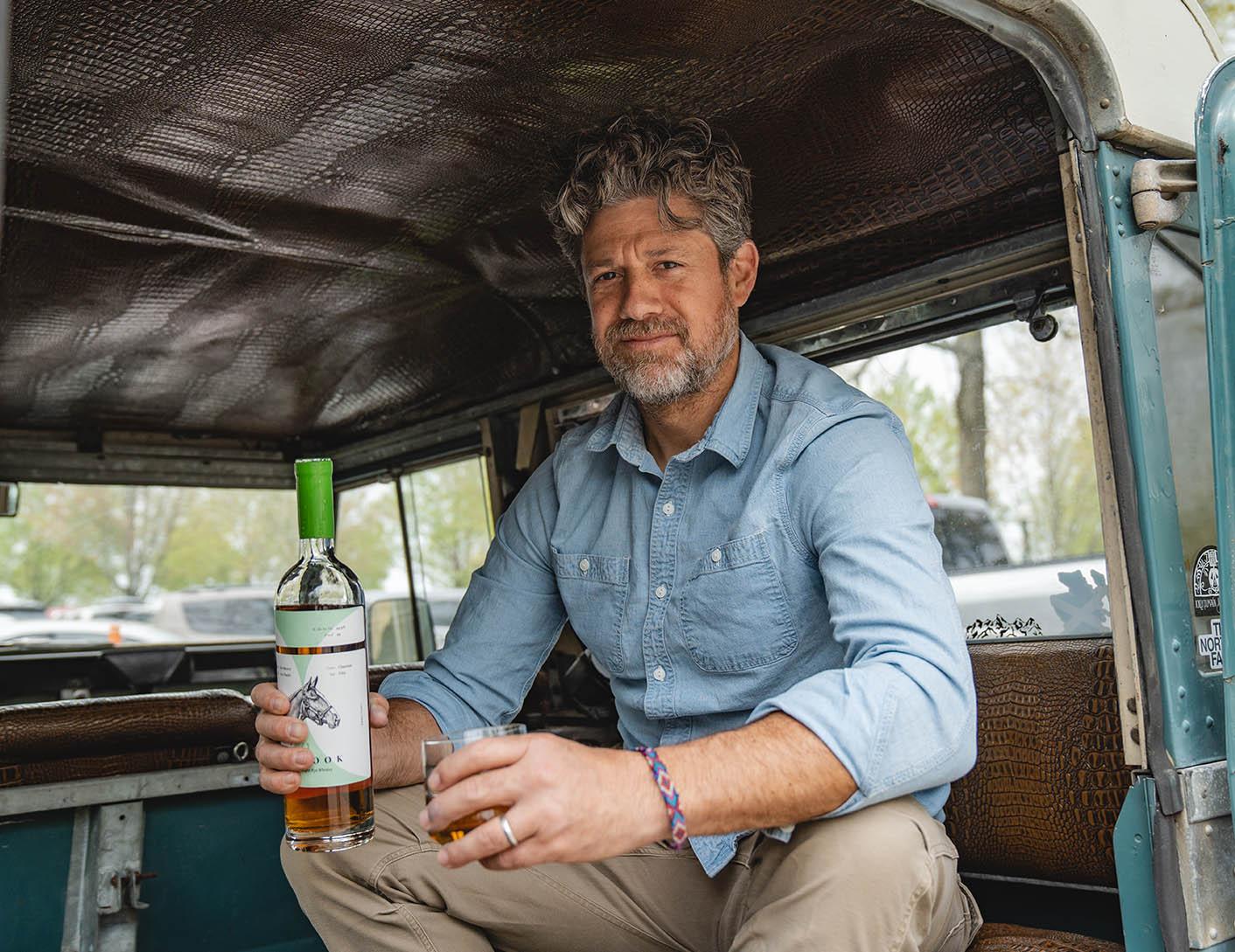
It's really all of the above. I'm drinking bourbon neat, I'm making bourbon cocktails, mostly focused on the classics like Sazeracs, Old Fashioneds, Manhattans, and things like that. Sometimes when it's a hot day in New Orleans, and I feel like drinking, I am going to look for something on the lower proof side, an everyday bourbon that's 100 proof, on the rocks. I still enjoy wine a lot though, and I feel like I drink champagne more than anything else. Champagne is so good, and why does the fact that it has bubbles mean that it has to be for a celebration?
Why can't you drink champagne as an everyday wine? There are also plenty of sparkling wines that are really excessively priced, so you know there's nothing inherent in bubbles like beer, for example, that means it's fancy. Then my next favorite spirit, after bourbon, is agave – I’m not collecting a ton of stuff but I do enjoy making a basic cocktail.
What has it meant to be able to partner with Castle and Key and be produced at such a historic place?
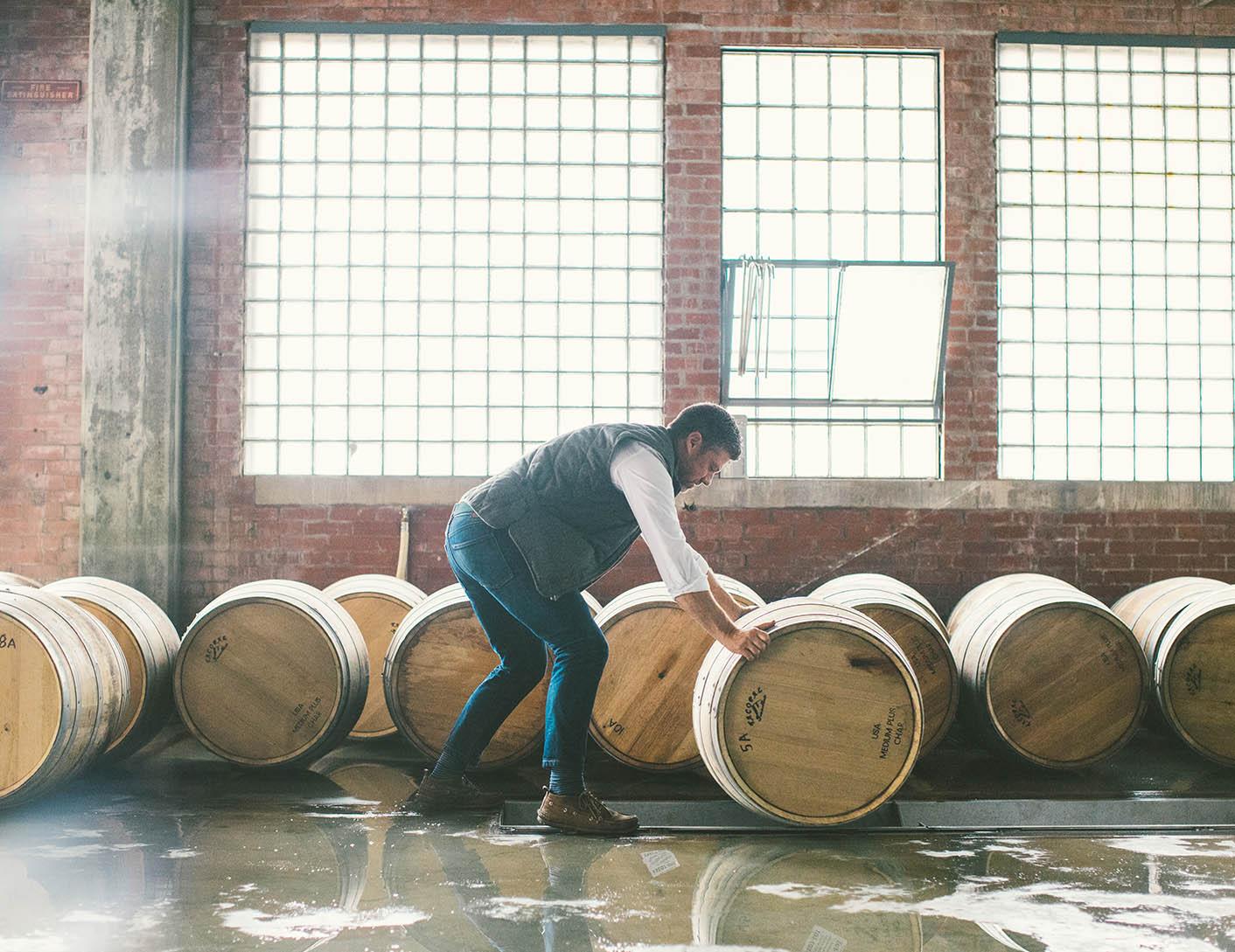
That is kind of crazy, because we had really just assumed that we were going to keep buying barrels from different people. It was actually a friend of Jamie's ( the horse guy), Will Arvind, who was the one that got the idea to buy this defunct distillery that had been sitting dormant since the early 70s, and to really restore it, bring it back to its former glory, and because of our friendship with them, and because they knew they had to do contract distilling to help generate cashflow – we had the opportunity to start contract distilling with them. Starting a new distillery is quite expensive, and so you're always trying to find different ways to generate cash flow, and you're laying down your own barrels, but making whiskey for other people at the same time is a way to generate immediate income, because you can benefit from the cash flow from the contracts right away, whereas for the stuff you put down, you have to wait until you're bottling it, and then obviously make vodka and gin, because you don't have a time constraint.
We were lucky to be the first people to sign a contract with Castle & Key, and we couldn't believe our good fortune. We're like, "Wow, this is crazy. This is the old Taylor Distillery; this amazing piece of bourbon history.” One of the original rickhouses that Colonel Taylor had started building in 1887 is Warehouse B, the longest rickhouse of its type in the world – it's like three football fields long. While we're not “partners” with them, just to even be able to have that association, and to have watched them from when this place was completely still a ruin, has been very special. We've been able to be present for every step of the way, from the initial clearing of the property to all that visitors see today. We got to work with Marianne (Barnes) Eaves while she was the Master Distiller, to create our custom mashbills – we have just two mashbills with them, a bourbon and a rye, and that was a really cool experience.
I had never done that before – you're tasting different white dogs from various mashbills with different yeasts, and trying to find something. I was really just looking for complexity and something that I thought just really landed well on the palette. So while we might not know how to distill, they're making something unique to us, and we've been able to watch it develop over time – I mean, there are now even seven year old barrels kicking around.
What are you excited about as you look to the future?
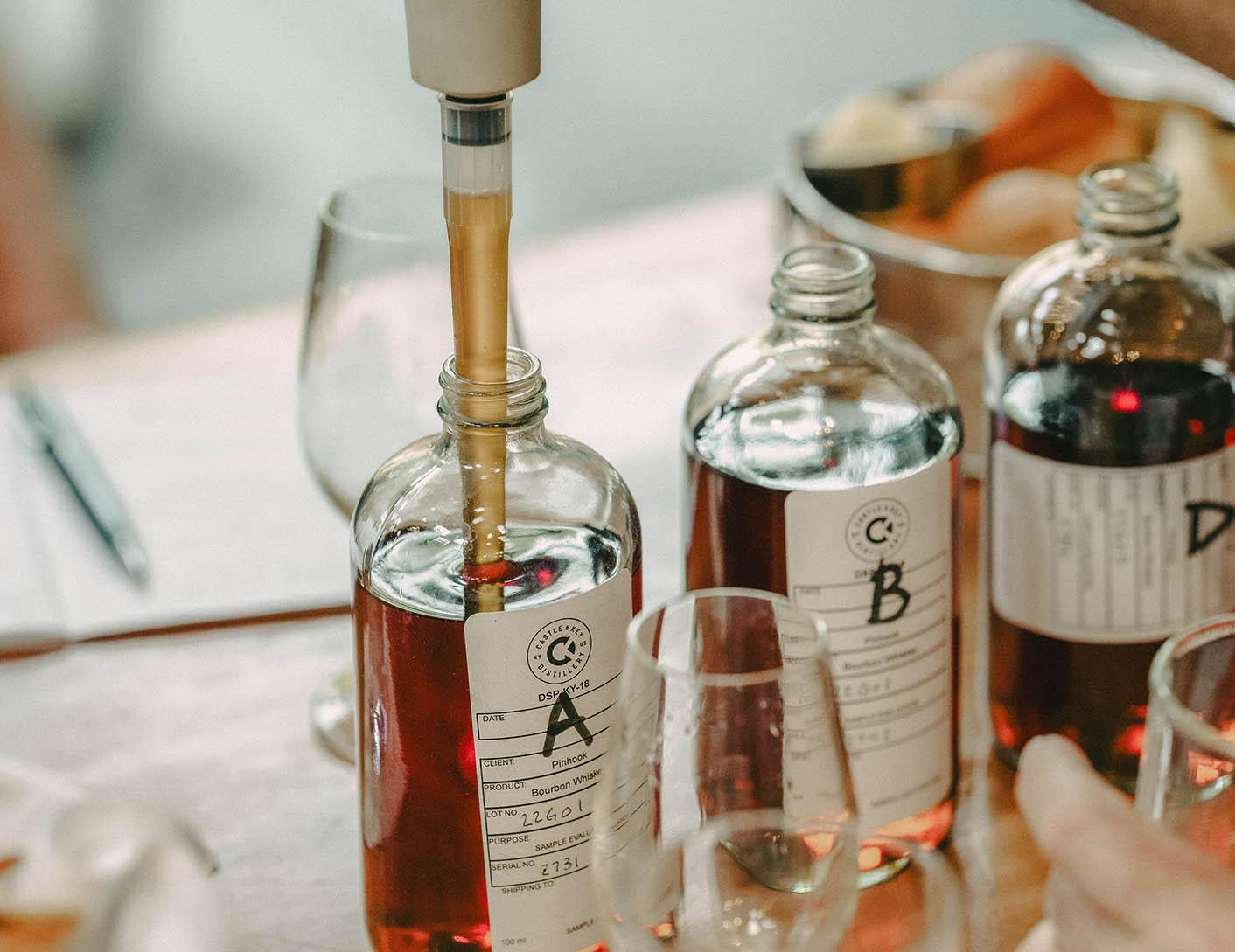
I think that we haven't even begun to see the beginning of blending, like more to the forefront of the whiskey conversation. The idea that it's a thing. And what does that mean? Did you know that one barrel can taste very different from another? So, figuring out which barrels to put together has a dramatic impact, so I can’t wait to see just more conversations about there's not just a master distiller, but a master blender. And you might accuse me of being biased, but maybe the master blender has a more pivotal role in shaping what you taste than the distiller does. So we're only at the beginning to me; we're at this first stage where people are even just beginning to acknowledge that blending a thing.
The next thing would be if you let me loose at, let's say, Buffalo Trace, for example – my first question would be, “why does each whiskey release have to live in its own silo? Why don't they get cross-pollinated? What could happen when you take 20% of the wheated mashbill with 50% of the high rye and 30% of the high corn? Those permutations would create basically endless combinations. What would happen if you make something called “Triple B”, representing Buffalo Trace, Barton, and Bowman, and you blend three different distilleries, all owned by the same parent company?
This is where blending can take center stage. Or when you blend a combination of barrels from different distilleries – we did just that with a 2-barrel blend that included Still Austin – that was a really cool combination. And it's so cool to me to think that maybe the best bourbon is some combination of multiple distilleries that no one's even tasted yet. With the availability there is now, maybe we will start to see this level of blending really start to take place.
The pursuit of making every release a unique vintage means that every new Pinhook bottle comes with a certain level of collectability and distinct flavor. You can learn more about past latest releases on the Pinhook site and visit the ReserveBar Pinhook Collection to make sure you have the latest line-ups.